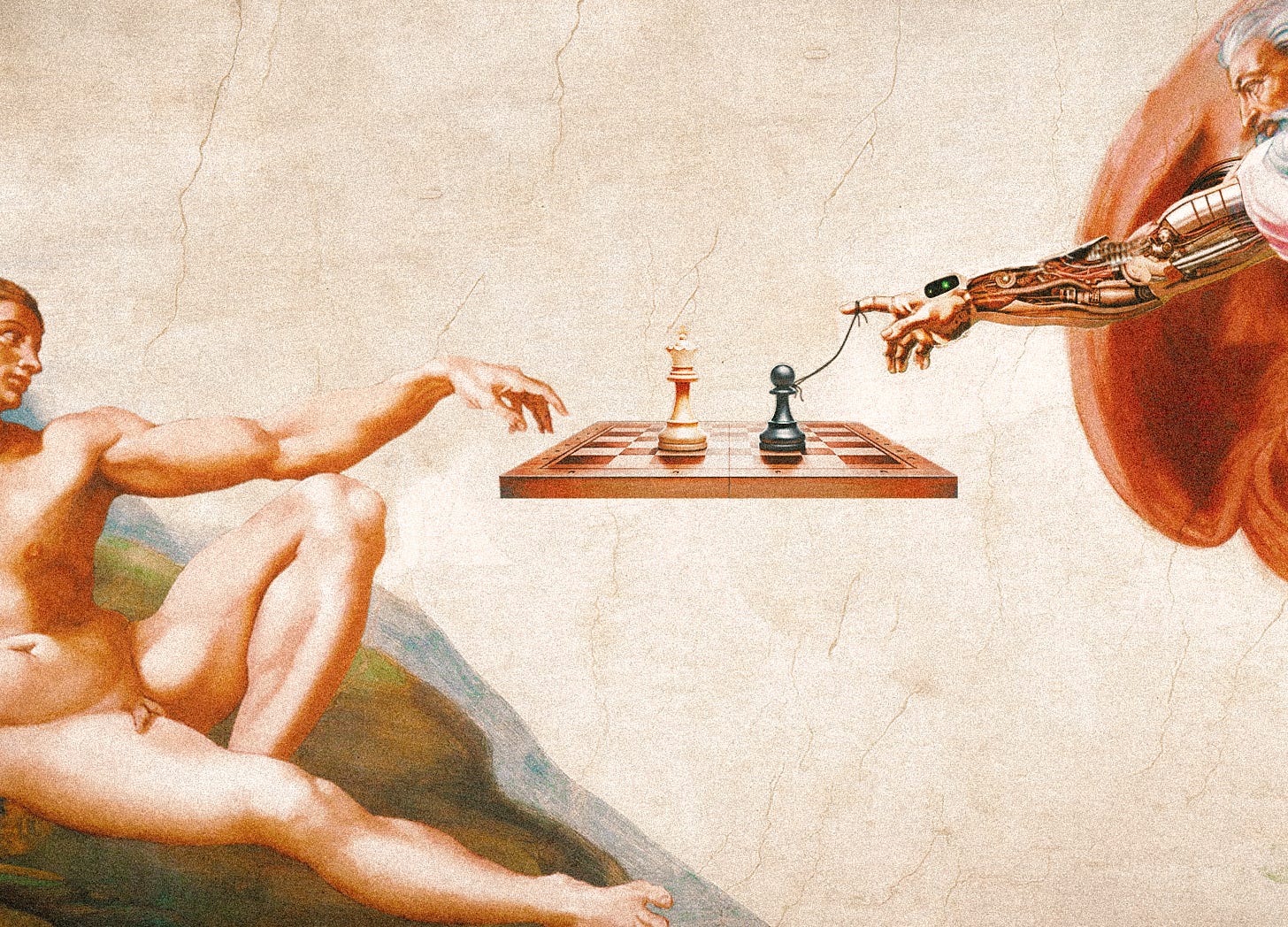
(Author’s Note: If you’re not super familiar with Chess, don’t worry, it won’t get too complicated. However, I would recommend knowing the basic rules to enjoy this article fully.)
The game of chess is quite old. In fact, as far as we know, chess has been around in some form for at least 1,500 years. Likely originating in the 600 BC Gupta Empire of ancient India, with the name Chaturanga, chess was a game of warfare. Chaturanga, a Sanskrit word, translates to “Four divisions”, referring to the four divisions of the Indian army: infantry, cavalry, elephants, and chariots. Respectively, these divisions were represented by what we now call the pawns, knights, bishops, and rooks.
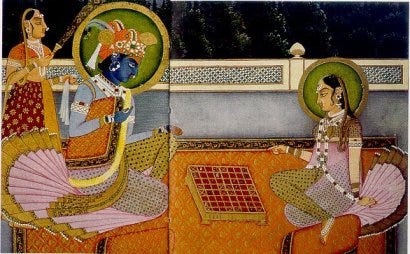
Some speculate that the game goes back even further, to between 2000 and 3000 BC. Archeological remains from the Indus Valley Civilization have been found with boards and pieces which seem to resemble chess. Additionally, it’s puzzling that the chariot was the most powerful piece on the board at the time, since chariots were largely considered obsolete by 600 BC. Alas, there’s much we simply do not know about the game’s origins.
Chaturanga was played somewhat differently than modern-day chess. For example, the “Queen” was called the Minister or the General, and could move one square in any direction, diagonally. The other pieces had different moves as well, with only the ashva, or horse, moving the exact same way as the modern-day knight. Nonetheless, this game caught on. Chaturanga spread throughout the middle-east, through Persia and Asia, and took on many names and variations.
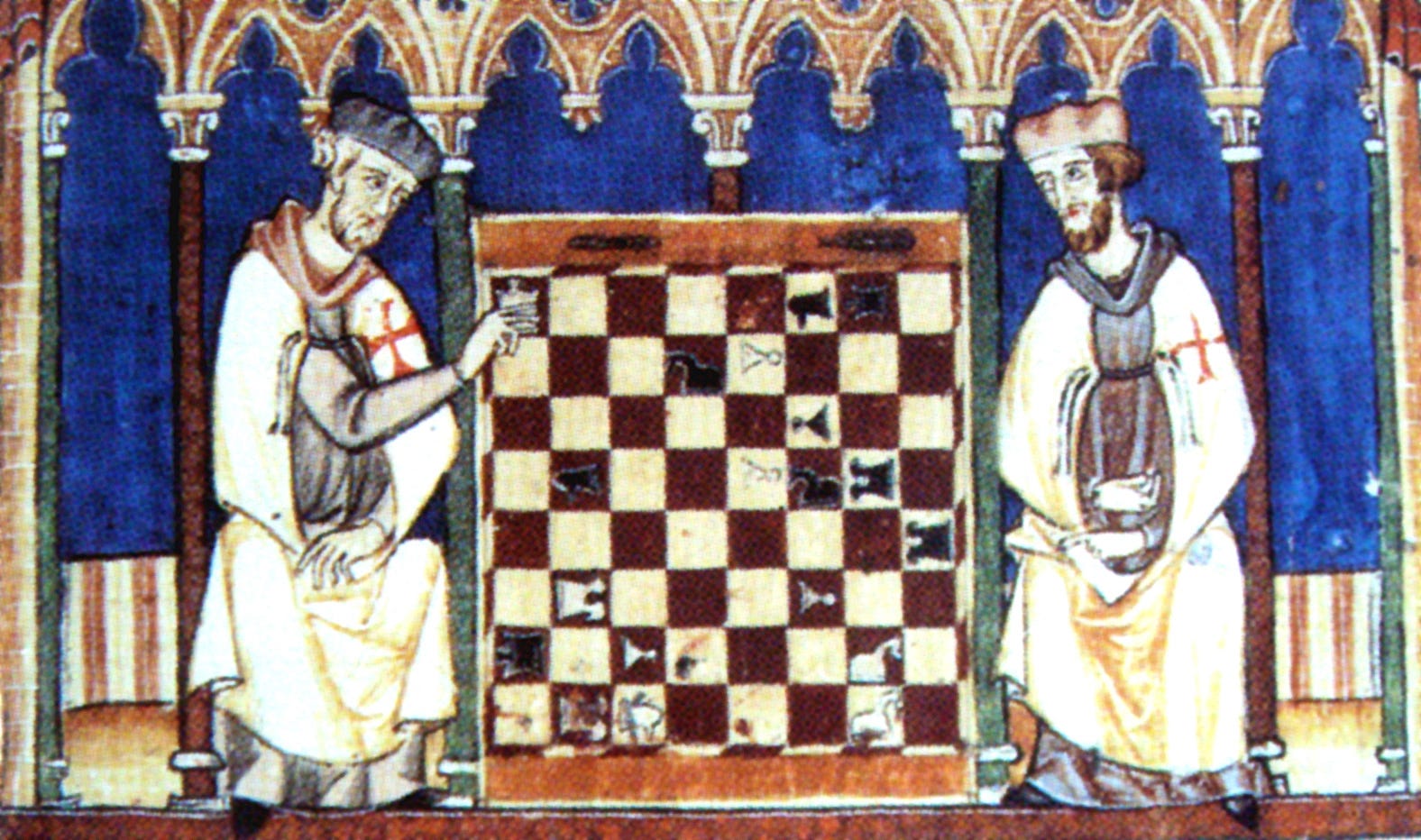
Modern-day chess is the result of this spread, and most directly, the adoption and adaptation of the game by the Europeans. During the medieval period, for example, chess was considered a knightly game. In fact, Peter Alfonsi, in his work Disciplina Clericalis, listed chess as a must-have skill for a knight.
The Europeans, however, got impatient, and decided to find ways to make the start of the game run faster. Pawns were allowed to move two squares forward on their first move, and the dreaded en passant rule followed. Castling was invented to allow the king a quicker retreat to the safety of the board’s edge. A version of chess referred to as alla rabiosa, meaning “with the madwoman”, emerged in late 15th-century Spain, allowing the Queen her modern-day abilities. Once the rules around stalemate were finalized in the early 19th century, we essentially had modern-day chess.
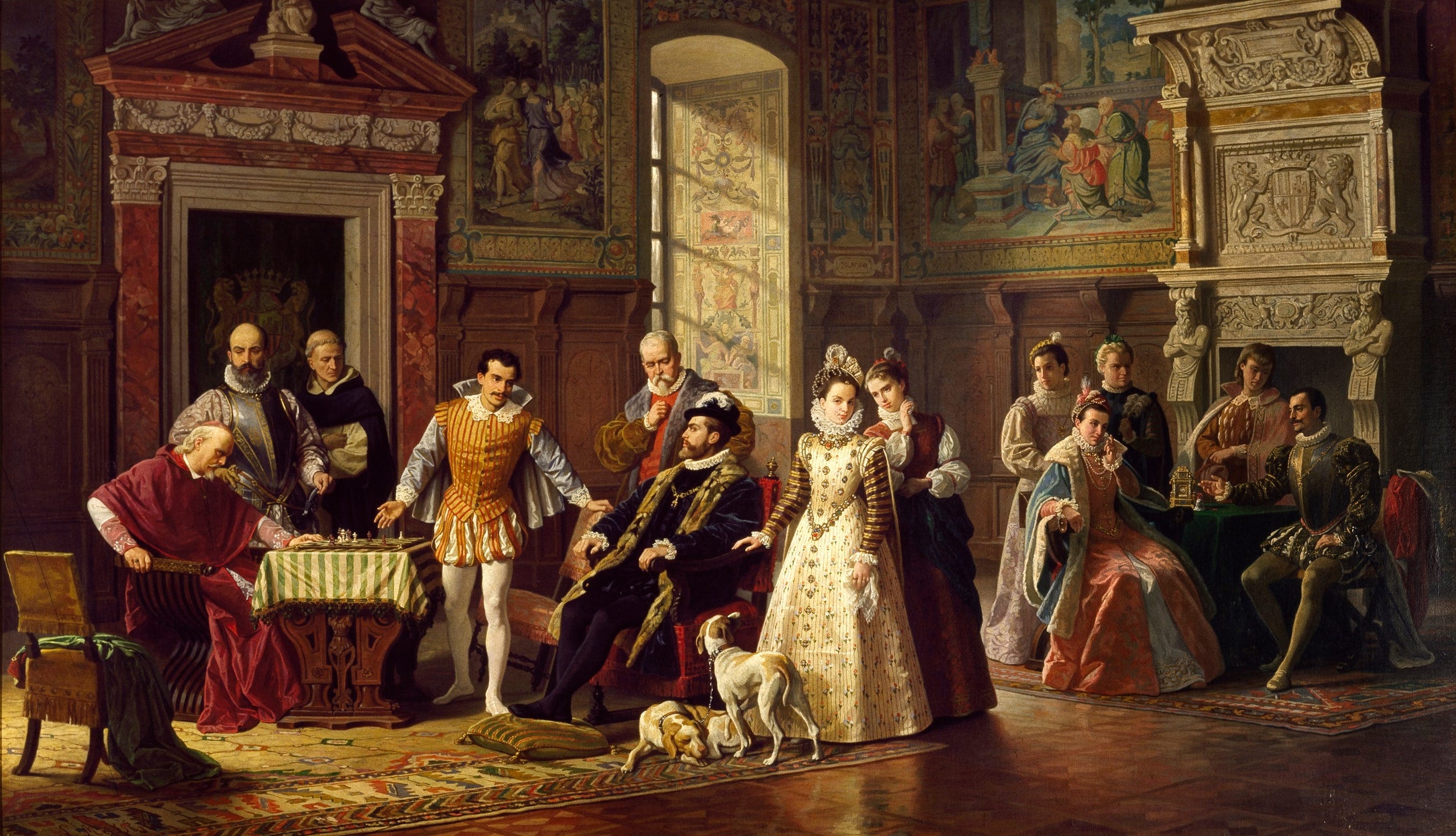
In 1560 AD, an Italian man named Giovanni Leonardo di Bona, lost a chess match in Rome to a Spanish priest named Ruy López de Segura. Yes, that Ruy López. Later, in 1575 AD, the first recorded chess tournament in history was held in Madrid, Spain. There, López and Leonardo would face off once again, with Leonardo defeating López and others to become the first chess master to win a tournament. Thus began a long tradition of competitive chess, which has continued to the modern day.
So chess carried on its merry way, growing in popularity, and solidifying itself as a symbol of strategic prowess. In 1851, the first modern chess tournament was held in London, and won by Adolf Anderssen, who went on to play the legendary Immortal Game. Other masters succeeded Anderssen. Paul Morphy was the greatest player of the 19th century, and is considered an honorary world champion, despite the title not existing during his lifetime. The 20th century saw the rise of legends such as José Capablanca, Mikhail Tal, Anatoly Karpov, Bobby Fischer, and of course, Garry Kasparov.
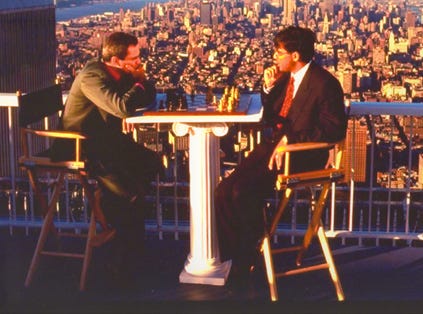
Garry Kasparov dominated the chess world for no less than 20 years, and is arguably the greatest chess player of all time. That is, the greatest human chess player. Kasparov became the number-one ranked chess player in 1984. However, a year later, in 1985, a doctoral student at Carnegie Mellon University named Feng-hsiung Hsu began development of a project. The project, called ChipTest, was a chess-playing supercomputer.
In 1987, ChipTest won the North American Computer Chess Championship, and Hsu went on to join IBM Research, and continued his project. A later iteration, called Deep Thought, achieved an Elo rating of 2600. Although Deep Thought won the World Computer Chess Championship, and became the first computer to defeat a grandmaster, the machine was no match for the likes of Garry Kasparov, losing to him twice in 1989. This prompted a rename. So came the infamous Deep Blue.
Man vs. Machine
In the February winter of 1996, Garry Kasparov played six matches against the IBM Supercomputer, Deep Blue, and won 4 of 6 games. While Kasparov prevailed, the computer had reached a significant milestone in its own right, having beat a world chess champion for the first time in a classical game under tournament regulations. Very close, but not quite close enough. A rematch was in order.
In May 1997, a year later, in New York City, Garry Kasparov once again faced Deep Blue. The computer, cold and calculating, evaluated 200 million positions per second to determine the quantitative value of a given chess move. The man, on the other hand, wielded a well-trained mind, complete with the vast intuition of a genius strategist, and the education of a master. Kasparov, alike to his competitor only in capacity to ideate movements of chessmen across a wooden board, fought not only for a prize, but for the dominance of the human species over a domain of intellectual endeavor.
The first game had our human protagonist with the white pieces. Kasparov slowly built a significant advantage over the machine for 43 moves, until on the 44th, Deep Blue blundered, allegedly due to a bug, and resigned in the face of an inevitable loss.
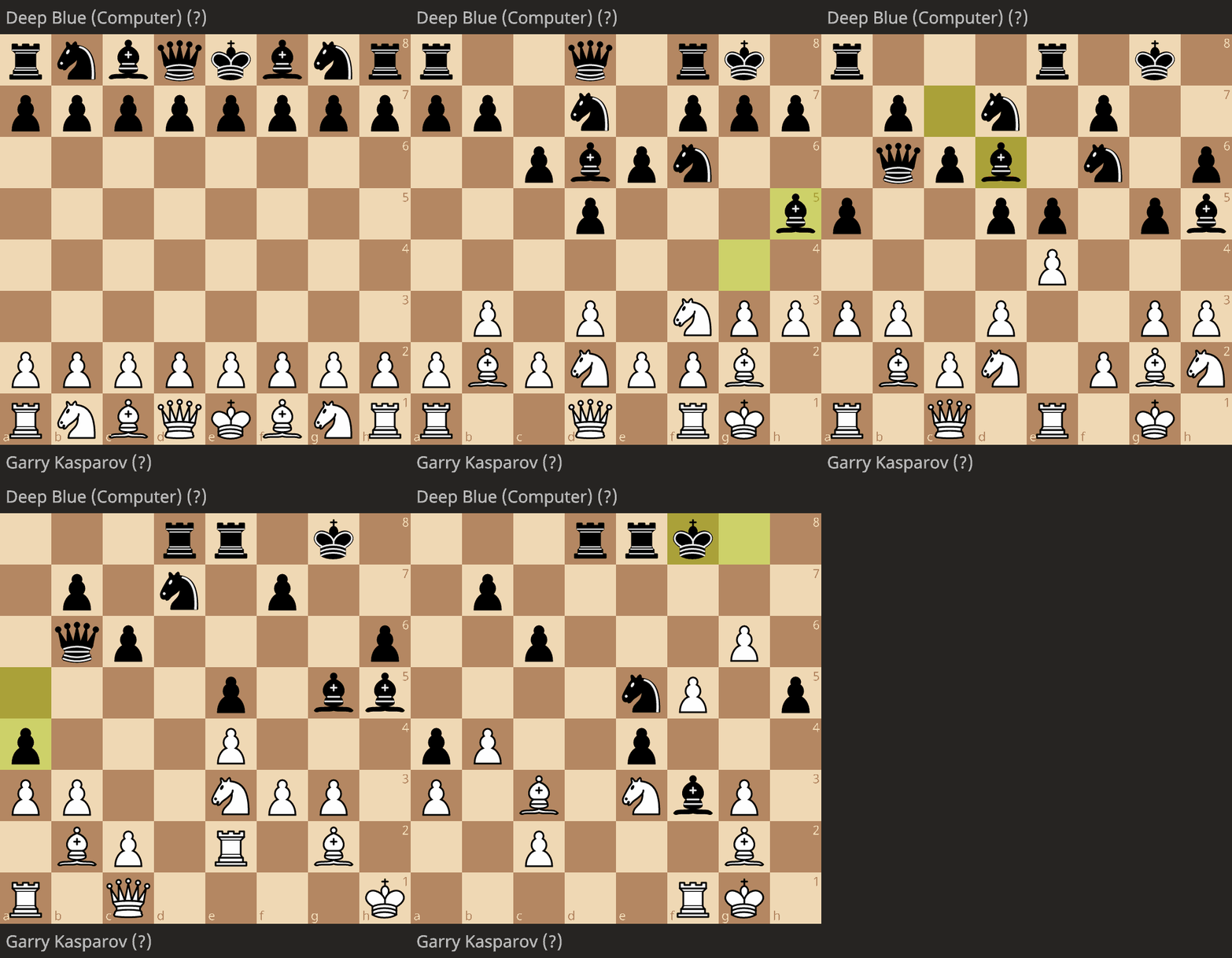
The second game, however, did not go the way of the human. With the white pieces, Deep Blue built a steady advantage from the start, and although Kasparov played near perfect, the computer was simply better. The game ended in a resignation from Kasparov, on the 45th move.
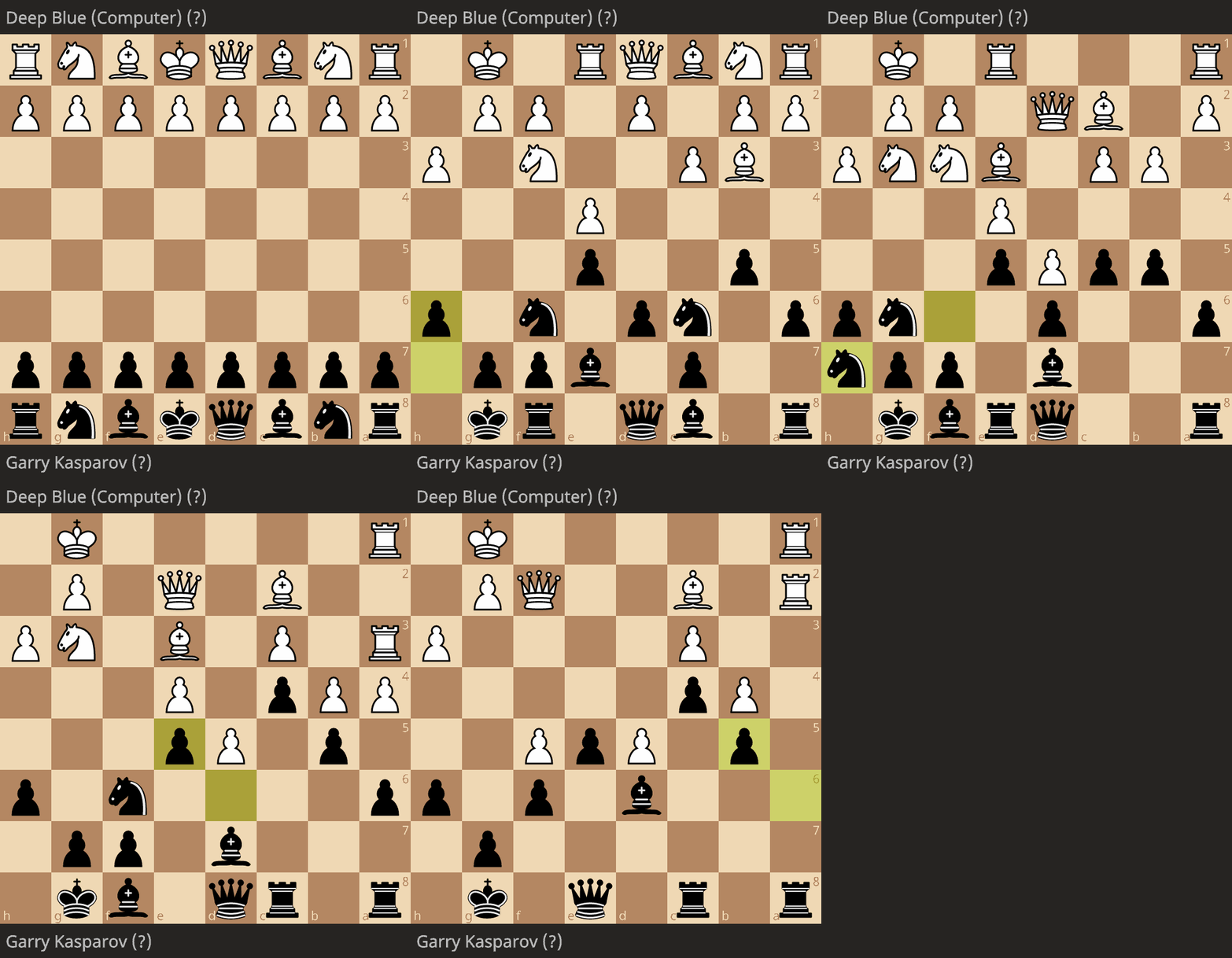
The next three games were draws by mutual agreement. Then came the final, deciding game, and Kasparov was playing defense. Playing with black is difficult at the high level, or so I hear. A draw is sufficient, since you’re defending, and white always starts with the advantage. However, Kasparov always played to win. With the pride of the human race upon his shoulders, Kasparov entered the final game of the match. The game was short.
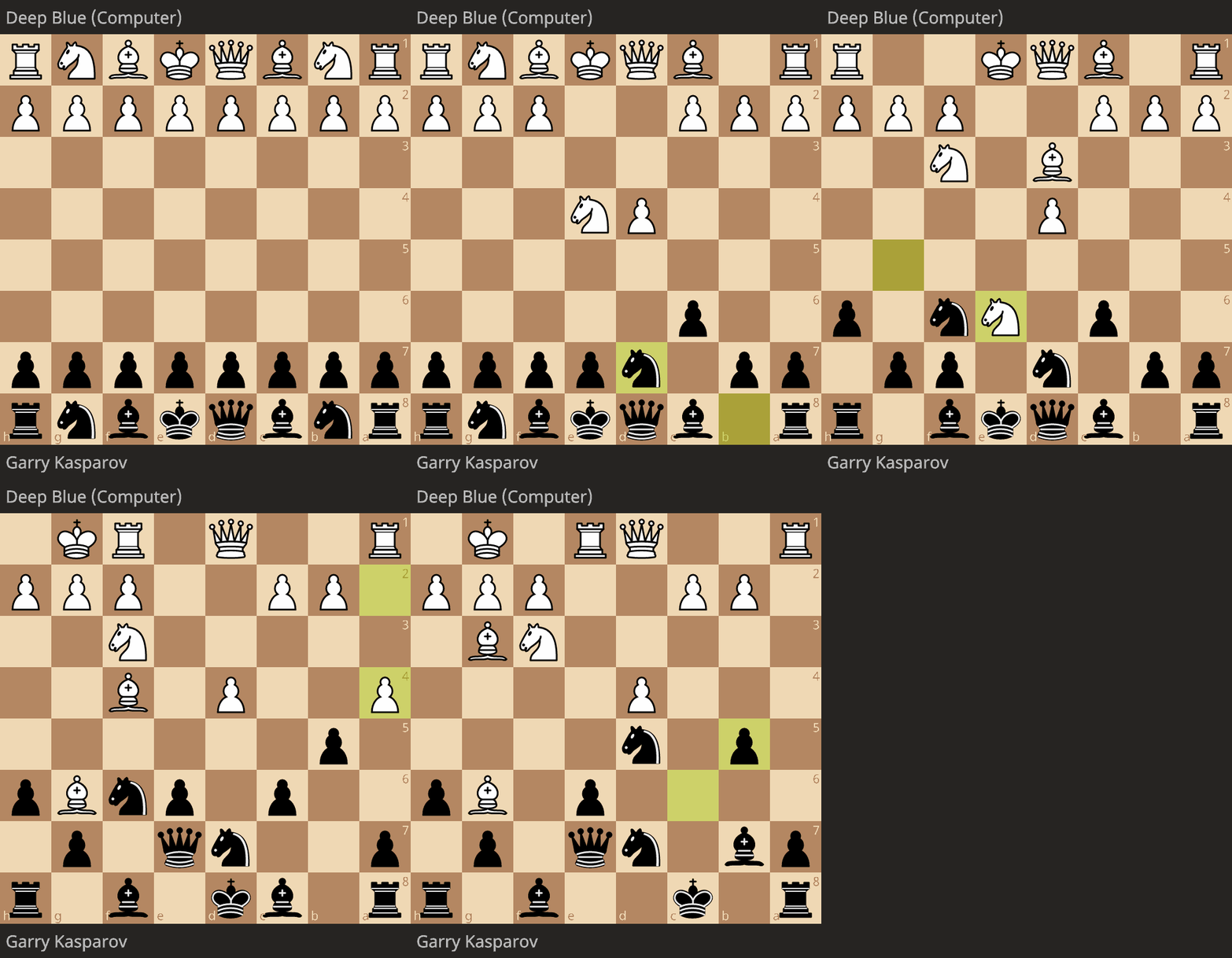
After a principled Caro-Kann defense by Kasparov, the machine, after evaluating millions of variations, sacrificed its knight, undermining Kasparov’s defense. It took a few moves, but it was in this position, facing a formidable attack, immense psychological stress, and a significant position disadvantage, that Garry Kasparov, the reigning world champion, resigned.
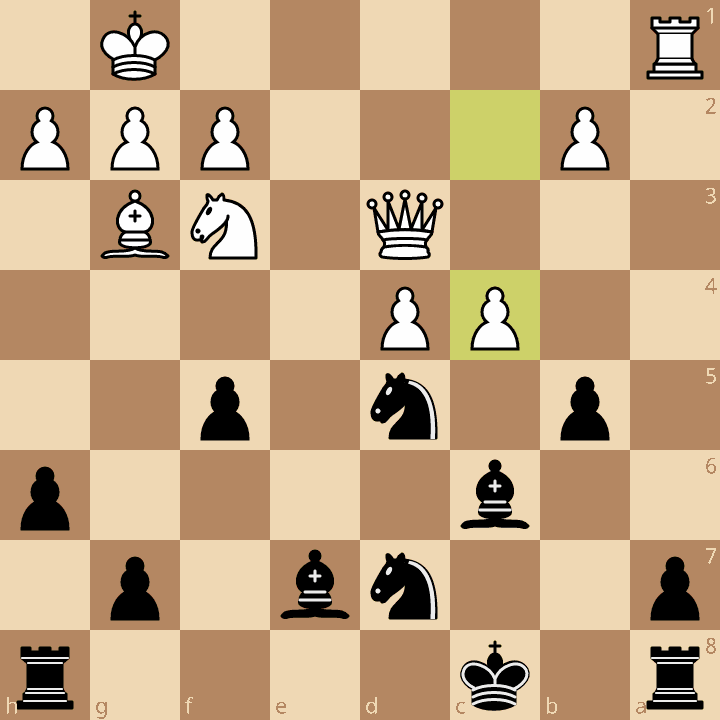
With the resignation of the game, Kasparov lost the match by a margin of a single point, and Deep Blue became the first chess computer to beat a world champion in a match under tournament regulations. With the defeat of the mighty Kasparov, Deep Blue had defeated the human race at a sport of the mind. Humans were no longer the best chess players, and they never would be again.
Evolution and Symbiosis
Deep Blue was the first chess computer to beat a world champion, however it was far from the last. In fact, a flourishing landscape of chess engines exists to this day, with new developments every year. Chess engines marked a fundamental shift in the way that people played chess. The game, previously, had only been thoroughly analyzed by humans, and so the depth of the theory was limited to the depth of human analytical capabilities.
Humans had determined the principles of the game, and developed significant strategy through a combination of talent, learned experience, education, and manual analysis. Control the center of the board. Get your pieces active. Simplify when you have an advantage. Aside from principles, players would memorize and study hundreds of lines of opening theory, painstakingly analyzing options from various positions to gain an edge over their opponents. Of course, this deep theory was formidable. The art had been built over the course of thousands of years, after all.
However, the human being simply can not match the computational power of the silicon chipset. As previously mentioned, the Deep Blue engine could evaluate approximately 200 million chess positions per second. For those unfamiliar with this metric, this means that for a given move, the engine could search the various possible game outcomes, and evaluate whether the move would prove advantageous for either side. This evaluation would be done per position, and through perusing the game’s search tree, an engine could determine the best move to play.
This ability to evaluate the position of chess pieces mathematically, meant that blunders, mistakes, inaccuracies, and advantage, could all be objectively quantified. Before the rise of chess engine strength, players would evaluate their games together to learn, now the chess engine would provide them their answeres. The chess engine cemented itself as a cornerstone of competitive and casual play and preparation. The chess board, which holds exponential possibilities for variation, was significantly demystified by the new tool.
Today, the game of chess has taken on many forms. However, most all forms involve some kind of chess engine analysis. Chess engines themselves have soared to new ratings, unparalleled by any human. The greatest human chess player, Magnus Carlsen, achieved a peak rating of 2882 Elo. Stockfish 16, the greatest chess computer, competes with an estimated 3641 +-12. That is to say, humans do not come close to competing at the level of computers, and likely never will.
That hasn’t stopped the computers from getting better though. As previously mentioned, Stockfish is widely recognized as the most powerful chess engine on the market. The engine relies on a traditional tree-search algorithm, which steps through various positions and evaluates them. It’s really good at that. However, in 2017, Google Deepmind brought their own engine to the scene, called AlphaZero. This engine had learned to play chess through millions of games against itself. And it got really good.
In a series of 100 games, AlphaZero won 28 times, drew 72, and lost zero games against StockFish 8. While there was some dispute, the Deepmind team went on to clarify the utility of their deep learning approach the next year, through an additional decimation of Stockfish 9. This prompted a significant movement of the chess engine scene towards use of neural networks in evaluation of chess positions. The so-called “evaluation function” of a chess engine was previously hand-crafted by human masters, but was now replaced by a learned approximation.
What Did We Learn?
The dominance of computers over an area of human intellectual endeavor, shocked the world at the time. However, as we see the story play out time and time again, the trend becomes the norm. Now we find ourselves ever more questioning whether computers will expand to take over intellectual domains more broadly. Will generative images take the jobs of artists? Will software developers become obselete? These questions have been a focal point of Software and Synapses since the beginning.
So what does chess teach us about computer takeovers? What will it look like for the Kasparovs of various industries to sit across from their own cold and calculating machines? I think it will be slow, then sudden, then things will be better than ever. Let me explain.
The first chess engine came not in 1985, but in 1948, created by none other than the legendary Alan Turing. Turochamp, as it was called, was the first computable algorithm capable of playing a chess game to completion. Unfortunately for Turing, the computer didn’t exist yet, so he executed his algorithm by hand. However, that is to say, the groundwork for the arrival of chess engines spanned nearly 50 years before the defeat of the mighty Garry Kasparov was successfully carried out in 1997.
In 1985, the top chess computers had ratings around 1400-1500. By 1990, they had reached the 2000 Elo range. In 1997, Deep Blue achieved an estimated 2700 Elo with its defeat of Garry Kasparov, and other engines caught up to the 2500 Elo range in the early 2000s. By 2010, the top engines had reached 3000 Elo, completely beyond the range of human achievement. It was slow, then sudden.
But then, something interesting happened. Despite some nihilistic attitudes towards the futility of the game of chess in light of its new metal overlords, and concerns of diminishing of the game’s appeal, chess didn’t go away. In fact, chess has never been more popular. Chess.com reached its millionth member in 2010, and 35 millionth in 2020. There are 600 million adults who regularly play chess.
The game has absolutely exploded. In many ways, chess engines are responsible. The barrier to entry was significantly lowered by the engine’s allowing unprecedented growth in experience by new players. Even at the top level of human chess, new levels were attainable due to the computer’s exemplary play. The greatest grandmasters stand no chance against the computer, but still find their play fascinating, and full of lessons.
Of course, there have been downsides. Cheating is one. Especially in online chess, foul-play is more possible than ever. One needs only the assistance of a chess bot to gain a significant advantage over their opponent. If you find yourself playing against a cheater, the game is likely already lost. Additionally, it is worth noting that while players still enjoy the game of chess, the comparison of chess to other fields of endeavor does break down.
Chess is a game, people play it for fun. An industry like web development or concept art is not directly comparable, since the demand for these industries is based on production of value. The artist draws a concept, and gets paid for their ability to do so. The developer builds an application, and is likewise paid for the produced value. However, a chess player is not paid for their production of a sufficiently valuable chess position, but rather for the entertainment value gained.
However, what we can learn from chess, and apply to our own careers, is that the computer might be better seen as an extension of a fundamentally human game. The world is still like a game, and we are the players. If we build machines to complete tasks for us at superhuman levels, then our productive capacity grows significantly. The barrier to entry for businesses and industries is lowered, as the widely distributable engines of automation handle production, guided by human will. The market will act as the chessboard, and provided the play is fair, competition and collaboration will serve to bring humanity forward.
Perhaps if chess can teach us anything, it’s that the real soul of the game was never in the movement of the pieces, or analysis of the position, but in the collaborative effort of humanity towards constant betterment.
Author’s Note
Ok, so you caught me, in large part I just wanted to write something about chess. However, I do hope that you found it as interesting as I did. Chess is an absolutely fascinating game. I find myself drawn to things that humans have been interested in for long periods of time. Whether that be literature, ideas, games, tools, or even food, it’s fascinating to know that a game like chess has such a rich history.
I don’t really have much more to say on chess yet, but if I find something in the future I will write about it. How engines work, for example, could be interesting. Although there’s already a pretty neat video here on that subject. Anyway, again, I hope you enjoyed.
With that said, as always, thank you so much for reading, and I’ll see you next time. Goodbye.
Credits
Thumbnail:
Bilal Azhar at https://substack.com/@intelligenceimaginarium
Music: Track - Feeling Good by Pufino, Source - https://freetouse.com/music, Free Music No Copyright (Safe)
Images
Krishna and Radha playing chaturanga on an 8×8 Ashtāpada - Darkness1089 at the English-language Wikipedia, Public domain, via Wikimedia Commons
Knights Templar playing chess, Libro de los juegos, 1283 - Alphonse le Sage, Public domain, via Wikimedia Commons
Final match of the 1575 tournament in El Escorial. Painting by Luigi Mussini. - Luigi Mussini , Public domain, via Wikimedia Commons
Kasparov and Anand in a publicity photo on top of the World Trade Center in New York, 1995 - Copyright 2007, S.M.S.I., Inc. - Owen Williams, The Kasparov Agency., CC BY-SA 3.0, via Wikimedia Commons